How Artificial Intelligence is helping fight climate change

Introduction
As carbon emissions continue to rise and extreme weather events become more frequent, governments, scientists, and industries are looking to advanced technologies for help. By analysing vast amounts of data, optimizing systems, and enabling smarter decision-making, AI is transforming climate tech and accelerating our transition to a more sustainable future.
AI for Climate Modeling and Prediction

One of the key contributions of AI to climate tech is in climate modeling and prediction. Traditional climate models rely on complex equations and long-term simulations, which can be computationally intensive and slow. AI, especially machine learning (ML), can improve these models by identifying patterns in historical climate data and making faster, more accurate forecasts.
Deep learning algorithms can process satellite imagery, weather records, and ocean temperature data to predict changes in climate systems. For instance, AI can enhance the accuracy of extreme weather forecasts—such as hurricanes, droughts, and floods—enabling governments and communities to prepare in advance and reduce potential damages. AI is also used to predict changes in biodiversity, sea level rise, and the spread of wildfires, providing critical insights for environmental planning and disaster response.
Optimizing Renewable Energy Systems
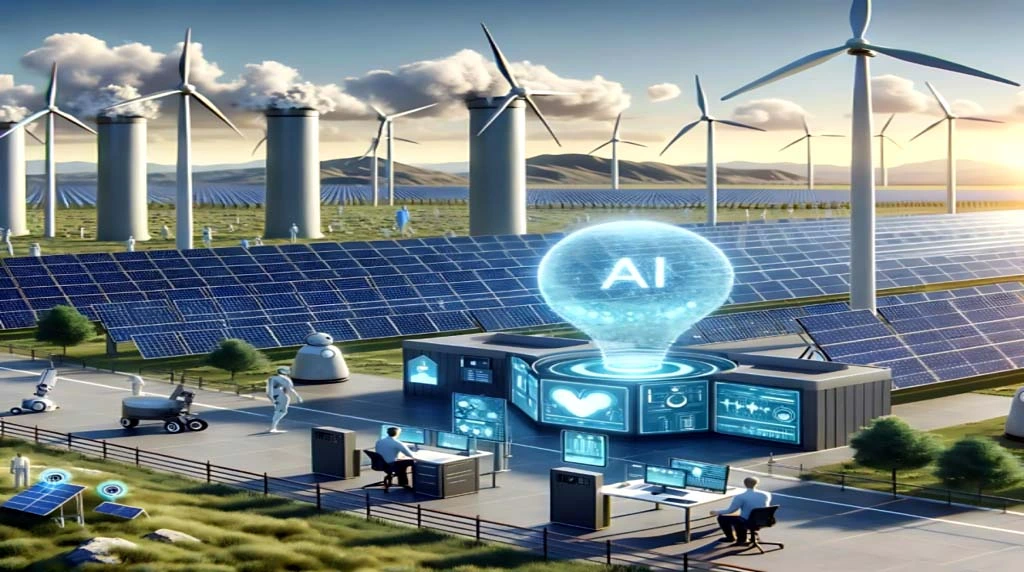
Renewable energy sources like solar and wind are vital to reducing our dependence on fossil fuels, but they come with challenges such as variability and unpredictability. AI is helping address these issues by optimizing the generation, storage, and distribution of renewable energy.
In solar power systems, AI can predict solar radiation levels based on weather data and satellite imagery, enabling energy providers to better plan for energy generation. In wind farms, machine learning algorithms forecast wind speeds and direct turbine operations to maximize efficiency and reduce wear and tear. AI also plays a crucial role in managing smart grids—automated electricity distribution networks that can dynamically balance energy demand and supply. These AI-driven grids improve reliability, reduce waste, and support the integration of more renewable energy sources.
Enhancing Energy Efficiency in Buildings and Industry

AI offers powerful tools to enhance energy efficiency across these sectors. This reduces energy consumption without compromising comfort or productivity.
Industries are also adopting AI-powered systems to streamline operations and reduce their environmental impact. For example, in manufacturing, AI can monitor machinery for inefficiencies, predict maintenance needs, and optimize production schedules to minimize waste. By making industrial processes smarter and leaner, AI contributes to lowering emissions and conserving resources.
Monitoring Deforestation and Ecosystem Health
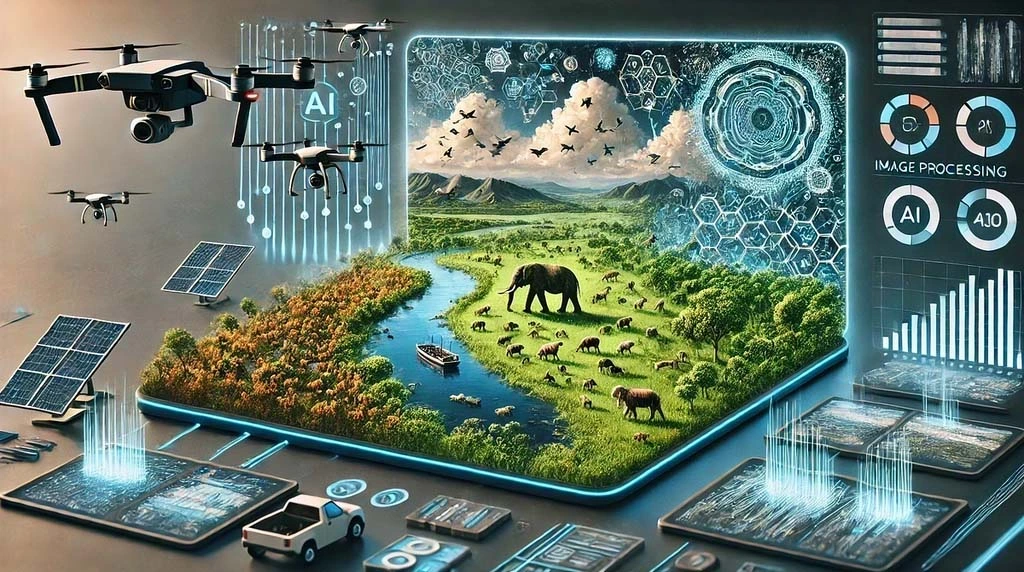
Forests play a critical role in absorbing carbon dioxide and preserving biodiversity, but they are under constant threat from illegal logging, agriculture, and urban expansion. AI is being used to monitor deforestation and assess ecosystem health using satellite imagery, drones, and remote sensing technologies.
Machine learning algorithms can analyse images to detect patterns of land-use change and identify illegal deforestation in near real-time. Conservation organizations and governments use this information to take swift action, enforce environmental regulations, and protect vulnerable areas. Additionally, AI is helping researchers track wildlife populations and understand ecological dynamics, contributing to better conservation strategies and more sustainable land management.
Carbon Capture, Removal, and Climate Policy
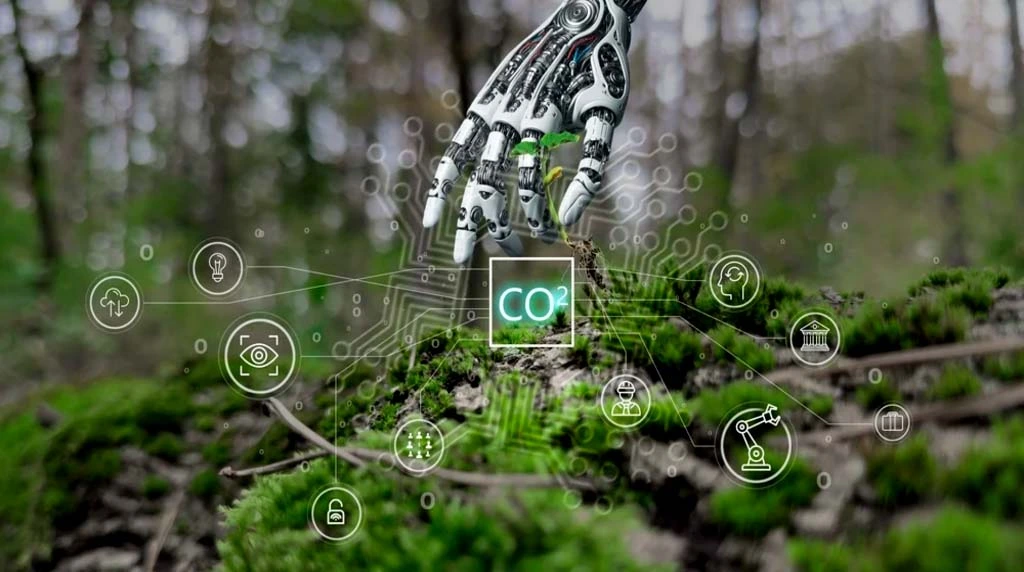
AI is also contributing to the development and deployment of carbon capture and removal technologies. These methods aim to extract CO₂ from the atmosphere and store it safely underground or use it in industrial processes.
Moreover, AI is being used in policymaking and environmental economics to evaluate the impact of different climate policies. By simulating scenarios and analysing socioeconomic data, AI can support evidence-based decision-making that balances economic growth with environmental sustainability.
Conclusion
From improving climate predictions and managing renewable energy to enhancing efficiency and protecting ecosystems, AI is transforming how we understand and address environmental challenges. As research and innovation in AI continue to advance, its integration into climate tech will play a crucial role in shaping a cleaner, more resilient future for our planet.
1. How does AI reduce carbon emissions if data centers use so much power?
This is the “AI Paradox.” While training a large model can use as much electricity as 100+ homes per year, the applications of that AI can reduce global emissions by 5% to 10% by 2030.
- The Offset: AI is used to optimize industrial cooling, shipping routes, and energy grids, saving far more energy than it consumes.
- Green AI: In 2026, major tech companies are legally committed to powering data centers with 24/7 carbon-free energy (solar, wind, and geothermal).
2. Can AI really help stabilize the energy grid with renewable energy?
Yes, and it’s one of its most critical roles. Because wind and solar are intermittent (the sun doesn’t always shine), the grid can become unstable.
- Forecasting: AI uses satellite data and historical weather patterns to predict renewable energy output up to 36 hours in advance with 90% accuracy.
- Smart Balancing: AI acts as an automated traffic controller, instantly shifting power from batteries or “prosumer” homes to areas of high demand, preventing the need for fossil-fuel “peaker” plants.
3. How is AI helping with "invisible" pollutants like methane?
Methane is roughly 80 times more potent than $CO_2$ over a 20-year period. Previously, tracking small leaks across millions of miles of pipelines was impossible.
- Satellite Detection: AI-powered satellites (like MethaneSAT) now scan the globe daily. AI algorithms automatically identify the “spectral signature” of methane leaks that are invisible to the human eye, alerting companies to fix them in real-time.
4. Does AI help farmers deal with extreme weather?
Climate change has made traditional planting seasons unpredictable. AI provides Precision Agriculture tools:
- Micro-Climates: Farmers use AI apps to get field-specific weather alerts, allowing them to plant or harvest just hours before a localized storm hits.
- Resource Efficiency: AI sensors analyze soil moisture and leaf health to deliver the exact amount of water or fertilizer needed to each plant, reducing chemical waste and water consumption by up to 40%.
5. Can AI help "discover" new ways to pull carbon out of the air?
Traditionally, discovering a new material takes decades of laboratory trial and error. AI has compressed this timeline significantly.
- Simulated Chemistry: Scientists use AI to simulate millions of chemical combinations to find the perfect “sponge” (often called Metal-Organic Frameworks or MOFs) that can capture $CO_2$ directly from the atmosphere at a low cost.
- Battery Tech: AI is also accelerating the discovery of solid-state batteries, which could store renewable energy for longer periods than current lithium-ion technology.