Software development life cycle (SDLC) explained
Introduction
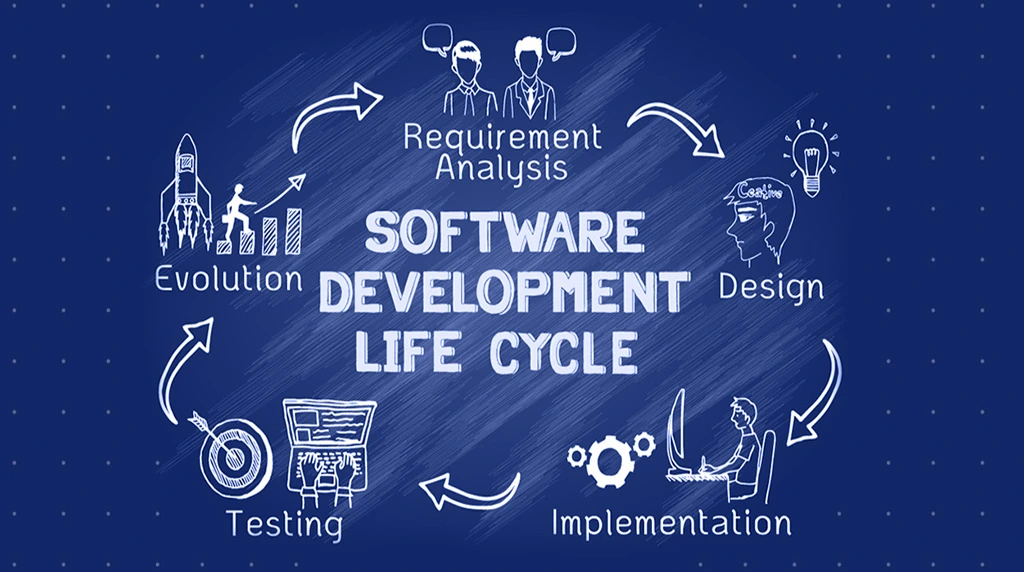
The Software Development Life Cycle (SDLC) is a systematic process for developing software that ensures quality, efficiency, and predictability. It defines a series of stages that software must go through, from initial planning to final deployment and maintenance. Each phase of the SDLC has specific goals and deliverables, helping teams build reliable and functional software systems. By following this process, organizations can reduce errors, meet deadlines, and create software that meets user expectations.
1. Planning

The first phase of the SDLC is planning. During this stage, the project’s objectives are identified, the scope is defined, and key resources are allocated. Planning also includes cost estimation, timeline setting, and risk analysis. This phase acts as the foundation for the entire project, ensuring that all team members understand the goals and constraints. Without a solid plan, a project may suffer from scope creep, missed deadlines, or budget overruns. Therefore, effective planning sets the stage for a successful software development process.
2. Requirement Gathering and Analysis
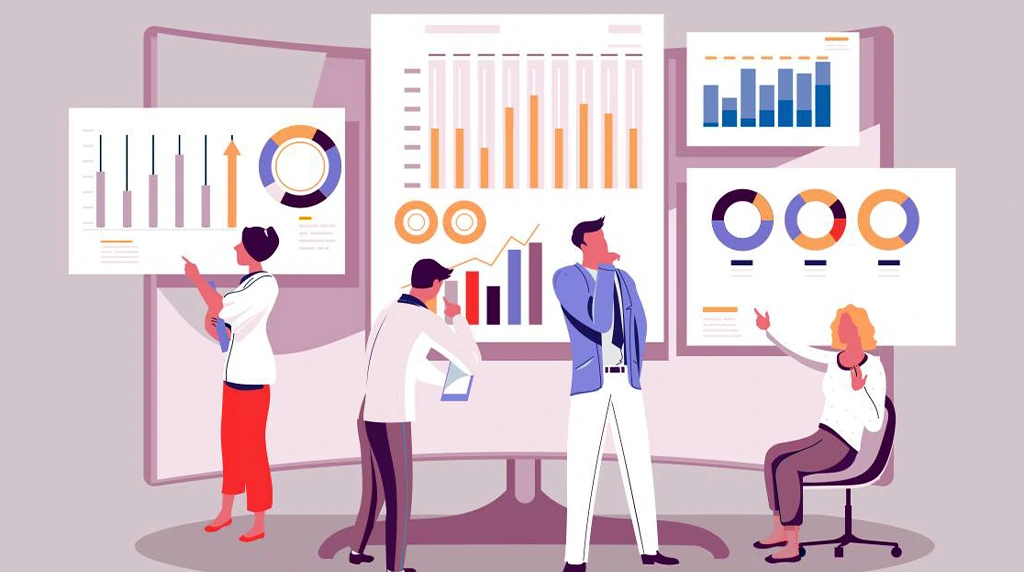
In this phase, the development team works closely with stakeholders to gather and analyse the software requirements. These requirements include both functional needs, like features and behaviour, and non-functional aspects, such as performance, security, and scalability. Analysts use techniques like interviews, surveys, and use case diagrams to collect information. Once collected, the requirements are documented and reviewed to ensure clarity and completeness. This phase is critical, as any misunderstanding here can lead to major issues later in development.
3. Design
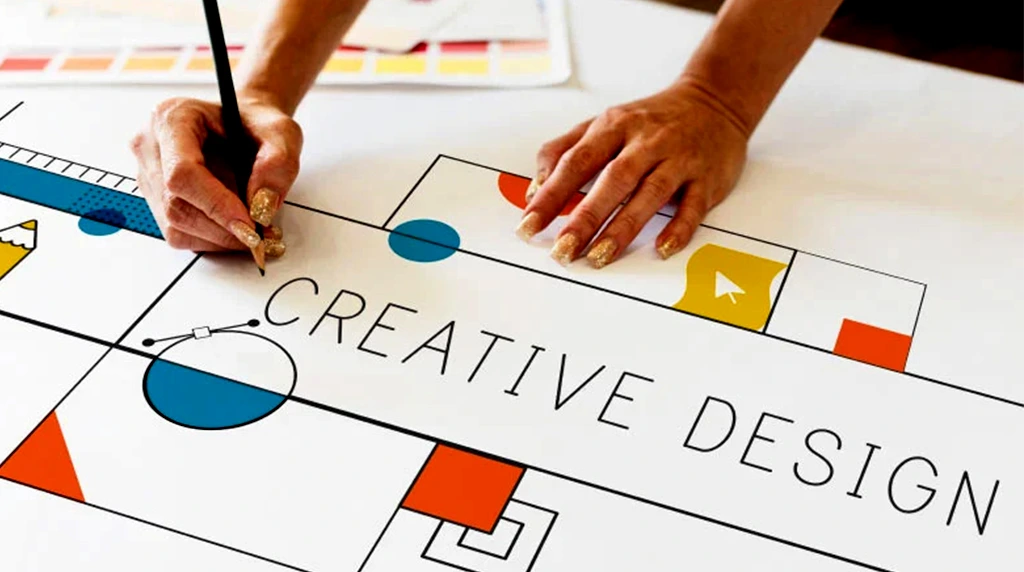
Here, the technical architecture of the system is created, including how different components will interact. This phase includes high-level design (HLD), which outlines the overall system structure, and low-level design (LLD), which details specific components, database schemas, and interface designs. The design serves as a blueprint for the developers and helps ensure that the final product meets the business and technical requirements.
4. Development
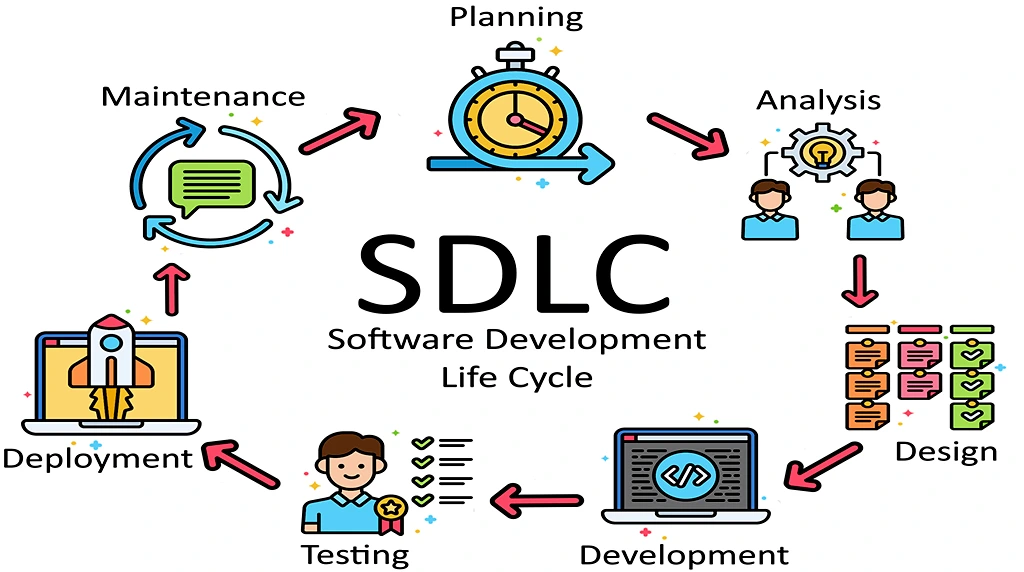
The development phase is where actual coding takes place. Developers write code based on the design documents, using the chosen programming languages, tools, and platforms. This phase often involves multiple developers working on different modules simultaneously. It is essential that the code is written in a consistent, maintainable manner and follows best practices. Version control tools like Git are often used to manage changes. Regular code reviews and testing during development help catch issues early and ensure the quality of the software.
5. Testing
Testing helps identify bugs, performance issues, and security vulnerabilities. Automated testing tools are often used to speed up the process and improve accuracy. Testing is a critical phase because even a small bug can lead to major problems once the software is released. A well-tested product increases user satisfaction and trust.
6. Deployment

Once the software passes all testing phases, it is ready for deployment. This involves releasing the product to the users, either through a full-scale launch or a gradual rollout. In some cases, the deployment may start with a beta release to a limited audience for final validation. Deployment can be done manually or through automated pipelines using tools like Jenkins or GitHub Actions. This phase also includes preparing user documentation, training materials, and support resources to ensure a smooth transition for end-users.
7. Maintenance

Software development doesn’t end with deployment. The maintenance phase is ongoing and involves updating the software to fix bugs, improve performance, and add new features. Over time, user needs, business goals, and technology may change, requiring updates to keep the software relevant and efficient. Continuous monitoring and feedback collection during this phase help keep the software aligned with user expectations.
SDLC Models
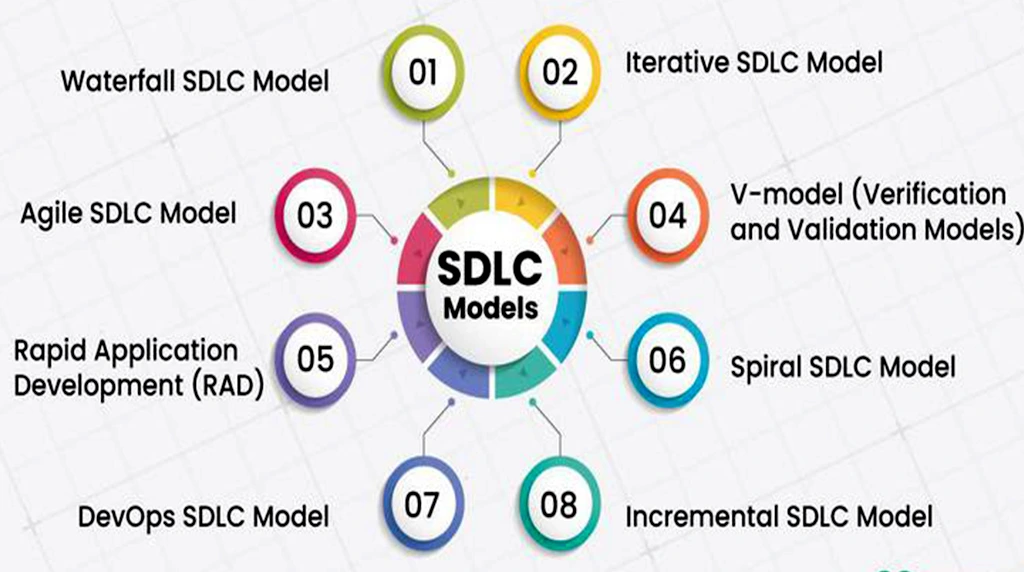
There are various models of SDLC, each suited to different types of projects. The Waterfall model follows a linear sequence and works well when requirements are clear from the start. The Agile model is iterative and emphasizes flexibility, collaboration, and customer feedback, making it ideal for dynamic environments. Other models include Spiral (focused on risk analysis), V-Model (emphasizes testing), and Incremental (develops software in parts). Choosing the right SDLC model can greatly influence the success of a project.
Conclusion
The Software Development Life Cycle is a proven framework that helps teams deliver high-quality software in a structured and efficient manner. By breaking down the process into clear phases—planning, requirement gathering, design, development, testing, deployment, and maintenance—teams can stay organized, reduce risks, and meet business goals. Understanding and following the SDLC not only leads to better software but also to happier users and more successful projects.
Q1: What is the Software Development Life Cycle (SDLC)?
The Software Development Life Cycle (SDLC) is a structured process used by software developers to design, develop, test, and maintain software applications. It helps teams create high-quality software within a planned budget and timeline. SDLC provides a step-by-step framework that ensures every stage of software development is properly managed.
The main phases of SDLC include:
- Requirement Gathering
- Planning
- Designing
- Development
- Testing
- Deployment
- Maintenance
Q2: Why is SDLC important in software development?
SDLC is important because it creates a systematic approach for software development. Without proper planning and structure, projects may face delays, increased costs, security issues, and poor performance.
Some major benefits of SDLC are:
- Better project management
- Improved software quality
- Reduced development risks
- Faster delivery of projects
- Proper documentation and communication
- Easier maintenance and updates
Q3: What are the different models of SDLC?
There are several SDLC models used depending on project requirements and complexity. The most common SDLC models include:
- Waterfall Model – A simple linear approach where each phase is completed before moving to the next.
- Agile Model – Focuses on continuous development, collaboration, and customer feedback.
- Spiral Model – Combines risk analysis with iterative development.
- V-Model – Emphasizes testing at every development stage.
- Iterative Model – Software is developed in small repeated cycles.
Q4: What happens during the testing phase in SDLC?
The testing phase is one of the most critical stages in SDLC. During this phase, testers identify bugs, errors, and performance issues before the software is released to users.
Different types of testing include:
- Unit Testing
- Integration Testing
- System Testing
- Performance Testing
- Security Testing
- User Acceptance Testing (UAT)
Q5: What is the role of maintenance in SDLC?
Maintenance is the final phase of SDLC and continues even after the software is deployed. In this stage, developers monitor the software, fix bugs, improve features, and update security systems.
There are four main types of maintenance:
- Corrective Maintenance
- Adaptive Maintenance
- Perfective Maintenance
- Preventive Maintenance