The Role of Artificial Intelligence in Modern Computers
Introduction
The artificial intelligence is one of the most revolutionary things that influence the modern technology. Through smartphones to super computers, (AI) is transforming the way machines work, the way people relate with machines and the way business is creatively done. The computers that used to perform only a few functions involving taking orders and running programmed instructions have started to learn, adapt and make decisions. This breakthrough is to a great extent associated with the introduction of AI into modern computing systems.
Understanding AI in Computing
Artificial Intelligence means machine simulation of human intelligence. When used in the computer context, AI is used to analyze data and identify trends and carries out tasks otherwise performed by human intelligence, including problem-solving, decision-making, and natural language processing. The computers driven by (AI) can continuously learn and improve unlike the traditional software which uses rigid programming.
Enhanced User Experience

The AI-powered computer products in the modern world are smarter and more personal. The presence of voice assistants, such as Siri, Cortana, and Google Assistant, allows users to command devices easier with the help of natural language. AI integration has made it possible to have predictive text, grammar corrections, and real-time translations. Everyday computer use is also made more intuitive and efficient by AI-driven recommendation engines that are used to suggest movies, music, or products to the user according to their habits.
AI in Cybersecurity

In cybersecurity, Artificial Intelligence has been playing one of the most vital functions in computers, especially the modern ones. Old-fashioned security tools cannot be relied upon with the rising number of cyber attacks. The AI-based security systems will be capable of investigating millions of data points in real-time, identifying the abnormal activities, and addressing possible breaches more quickly than human operators. The characteristic characteristics such as biometric authentication, anomaly detection, and automated threat response are now common in AI-enhanced computers making digital environments safer.
Smarter Data Processing
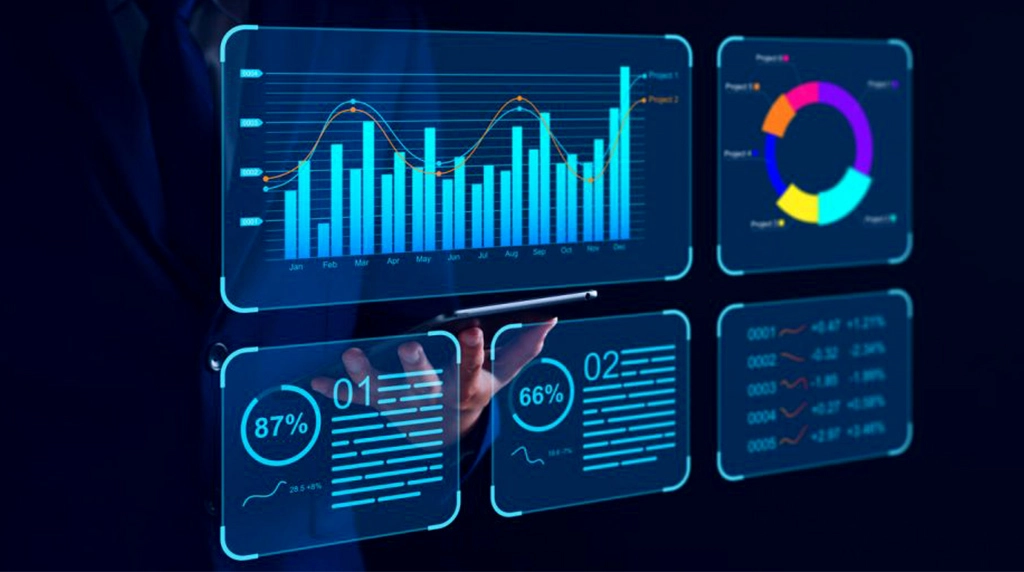
The contemporary electronic environment is producing massive data sets in each second. The computers with Artificial Intelligence have ensured that it is easy to process and interpret this big data. Machine learning algorithms enable computers to draw insights, patterns and predictions out of large datasets. Companies have AI-powered computing applications to make decisions based on data, predict market trends, and increase customer interaction.
Role in Creativity and Productivity
Artificial Intelligence is not subject to technical use only, but it is also crucial in enhancing creativity and productivity. AI-powered computers will allow designers to come up with graphics, writers to produce content, and musicians to compose sounds. Such applications as AI-powered photo editors and automated video creation tools are an indication of how computers become creative collaborators of professionals. One of the ways AI has increased productivity in the workplaces is through automation of routine tasks through AI-powered tools on scheduling, task management, and virtual collaboration.
AI and Cloud Computing

The use of modern computers is commonly combined with cloud computing, which involves a significant role of AI. Cloud-based AI solutions are availed of the sophisticated computing power and machine learning models without necessarily having to own costly equipment. The implementation of Artificial Intelligence in all types of businesses regardless of their scale makes it possible to use AI in customer service (through chatbots), financial analysis, and optimization of logistics. The synergy between AI and cloud computing has made access to high-end computing capabilities democratic.
AI in Healthcare and Research
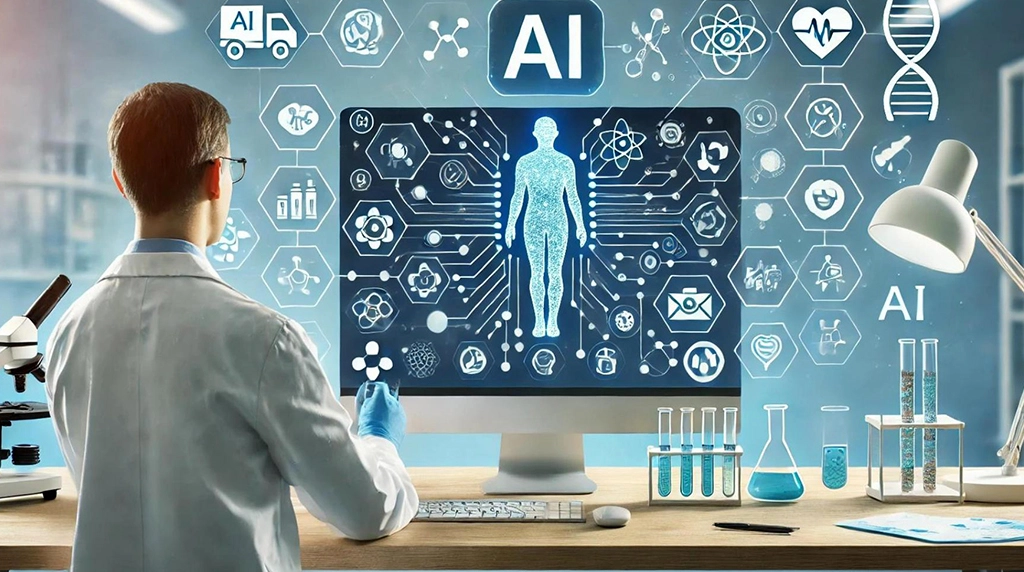
Healthcare and scientific research has been transformed by the use of computers with the ability of AI. The AI-based computing systems process the complicated medical data and give actionable information, ranging from predicting disease outbreaks to aiding in drug discovery. In scientific disciplines, AI-powered supercomputers have the ability to model climate, process astronomical data and even provide breakthroughs in areas that were previously unthinkable. This emphasizes the fact that Artificial Intelligence in the current computer not only concerns convenience but also solving world problems.
Challenges and Ethical Concerns

Although the use of AI in contemporary computers is revolutionary, it is not without problems. Such problems as data privacy, algorithm bias, job displacement, and ethical AI use are important issues. With smarter computers, the issue of accountability and transparency in decision-making increases. One must make sure that the use of (AI) is responsible and productive to society in general.
The Future of AI in Computers

The future of artificial intelligence in contemporary computers is bright. As quantum computing, edge computing, and generative AI improve, computers will be further enhanced to become more powerful and functional. Smarter imposed personal devices, highly secured systems, and computers that can answer complex global problems. Artificial Intelligence integration with computing will keep on being innovative in all industries, in education, health and in daily lives.
Conclusion
Artificial Intelligence has altered the purpose of the modern computers which were just mere data processors to becoming intelligent systems able to learn, reason, and adapt. (AI) has become an essential part of the modern computer not only by improving user experiences and increasing cybersecurity, but also making it possible to make decisions that are data-driven and contribute to scientific research. With the development of technologies, the collaboration between artificial intelligence and computers will be even more powerful and form a more intelligent, connected, and innovative future.
FAQs: The Role of Artificial Intelligence in Modern Computers
1. How is AI different from traditional software in modern computers?
Traditional software follows explicit, pre-programmed instructions. If X happens, do Y. AI-enabled systems in modern computers use machine learning models to recognize patterns, make predictions, and improve from data without being explicitly coded for every scenario. For example, a traditional spam filter uses set rules, while an AI filter learns from millions of emails to identify new spam tactics automatically. This shift allows computers to handle ambiguous, real-world tasks like voice recognition and image classification.
2. Where do we actually see AI running inside a modern computer?
AI is now embedded at multiple hardware and software layers. At the hardware level, CPUs from Intel and AMD include dedicated NPUs or AI accelerators for tasks like background blur in video calls. GPUs and dedicated AI chips handle large model inference locally. At the OS level, Windows 11 Copilot, macOS, and Linux distros use AI for search, battery optimization, and security threat detection. In applications, AI powers features like Excel’s data analysis, Photoshop’s generative fill, and antivirus programs that detect zero-day malware behaviorally.
3. Why are computers moving toward on-device AI instead of cloud-only AI?
Three core reasons: latency, privacy, and cost. On-device AI delivers instant responses for features like real-time language translation or photo enhancement without waiting for a server. It keeps sensitive data such as documents, voice recordings, and personal images on your machine instead of sending them to the cloud. It also reduces dependency on internet connectivity and lowers long-term cloud compute costs. Modern “AI PCs” are designed specifically to run small language models and vision models locally for this reason.
4. What practical impact does AI have on computer performance and battery life?
AI creates both gains and trade-offs. On the positive side, AI-based resource managers can predict which apps you will use and pre-load them, or selectively throttle background processes to extend battery life by up to 20 percent. AI upscaling in graphics can render games at lower resolution then intelligently enhance them, boosting frame rates. The trade-off is that running AI models consumes power and memory. This is why new computers use NPUs, which execute AI workloads far more efficiently than a CPU or GPU, balancing performance with power consumption.
5. Will AI replace operating systems or basic computer functions?
No, AI augments rather than replaces the OS and core functions. The operating system still manages hardware, security, and file systems. AI acts as an intelligent layer on top. Think of it as moving from command-line interfaces to graphical interfaces to now conversational interfaces. You still need file management, but instead of manually sorting thousands of photos, you can ask the AI to “find all receipts from March” and it uses the OS file access to do it. The OS remains the foundation; AI becomes the interface and automation engine.