Degree or Skill? Which one will earn you a good salary today?
Intoduction
Degree or Skill—“What is necessary to earn a good salary today?
In today’s changing job market, every student has this question: can a degree alone secure a good job, or are practical skills more important?
In this blog, we will explore:
- What is the difference between a degree and a skill?
- What do companies look for in candidates today?
- Which skills are essential for high-paying jobs?
- Can I grow my career with AI?
- Which skills are job-ready?
“The formula for success you should follow “Degree + Skill + Practical Knowledge = Better Career Opportunities”
This blog is important for those students who dream about good-paying jobs. And at DOTNET Institute, you will not just get courses rather, we provide career-oriented skills and professional growth.
DOTNET Institute help those students who are facing this confusion:
- How to build a good career
- Which degree is best for the future?
- What are important practical skills?
- How to secure career
First of all remember this thing that today, companies don’t just look at your degree rather they look at how much value you can create for their business.
In this blog, we’ll tell you:
- Which skills can lead to a high salary?
- In-demand skills or degrees valuable for jobs in 2026
- And what is the right way to build a career?
Before the era of technology, artificial intelligence, and digital transformation, having a degree alone was enough to get a good job, but currently, job trends have fully changed.
The question today isn’t what degree you have, but rather “What skills do you bring with that degree? Let’s know in below sections:
Section 1: Why was a degree important in the past?

Until a few years ago, companies’ primary filter was qualification. If you had a graduation or professional degree, you were guaranteed an interview. Because competition was low at the time, and technology wasn’t changing as rapidly. But today, the situation has changed.
Section 2: Why has skill become more important today?
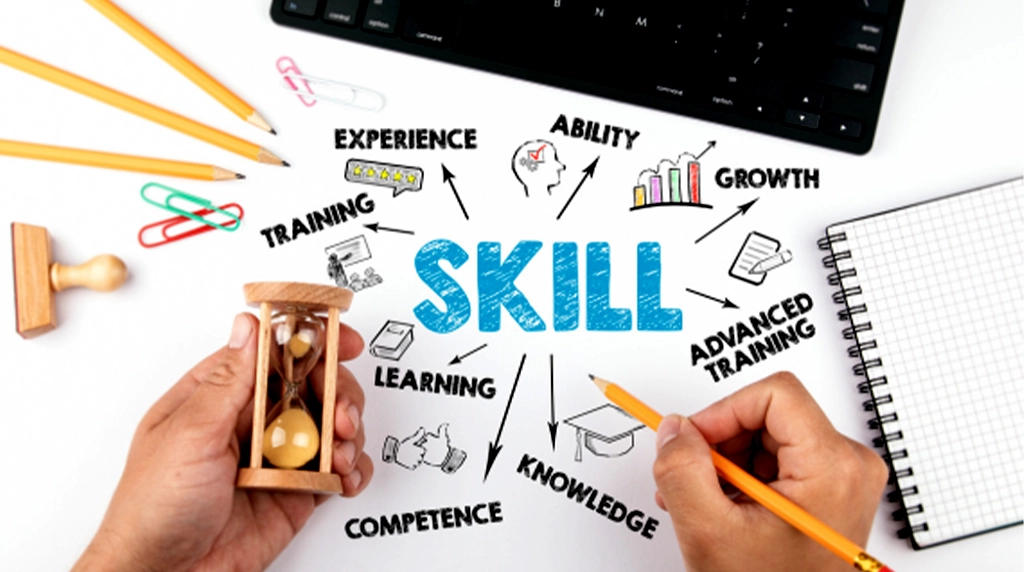
Today, companies need employees who not only know theory but can also solve real problems. For example:
A student may have a BCA or B.Tech degree but lack knowledge of:
- Programming, AI Tools
- Data Analysis
- Communication Skills
On the other hand, a student may have a basic degree but possess practical skills, such as:
- Digital Marketing
- Artificial Intelligence Tools
- Web Development
- Graphic Designing
- Data Analysis
- Communication Skills
So, who will the company prioritize? The candidate who will deliver results for the business.
Section 3: Is the value of a degree going down?

No, Degrees are still important because:
- It shows your education level.
- It’s a requirement for many government and corporate jobs.
- It helps your career growth.
But in today’s job market, the most powerful combination is “Degree + in-demand skill,” as a degree will bring a job, but the “Degree + Skill” formula will bring progress with a high salary too.
Section 4: Which Skills Should You Learn for a High Salary?

If you want a well-paying job in the future, you should focus on these skills:
- Artificial Intelligence (AI)
Today, the use of AI is increasing in every industry.
- Digital Marketing
Companies need experts for online growth.
- Programming & Web Development
There will always be demand in the technology sector.
- Data Analysis
Companies are making decisions based on data.
- Communication & Professional Skills
Because along with knowledge, you must also know how to present it.
Section 5: The Right Career Formula for Students
Don’t just aim to complete your degree. Develop skills with your degree that set you apart from others. If you’re currently a student, remember this formula:
- Education gives you a foundation.
- Skills give you opportunities.
- Experience gives you growth.
Section 6: Important Message for Parents
An important thing for parents too:
- Today, a career isn’t determined solely by marks.
- A student’s interest, practical knowledge, and skills are equally important.
- Give them an education that prepares them for a career, not just a certificate.
Conclusion
So friends, if we give the final answer:
- There is no competition between a degree and skill; the combination of both is the key to success.
But for success depending on a degree isn’t the right strategy in today’s competitive job market. If you want a high-paying career, then definitely learn job-ready skills along with a degree. Continuous learning and upgrading lead to a better future. Download DOTNET Institute’s app for information on career guidance, professional courses, and job-oriented skills for a better career. If you this is blog useful for you, then please share it with your friends to help them clear doubts about career-related problems.
Remember this: “A degree gives you Identity, but a skill brings you success.” means “In today’s world, its capability, not a certificate, that increases salary.
FAQs: Degree or Skill? Which One Will Earn You a Good Salary Today?
1. Is a degree enough to get a high-paying job?
A degree proves your educational qualification, but employers increasingly look beyond certificates. Practical skills, industry knowledge, communication, problem-solving ability, and hands-on experience can strongly influence your career opportunities. The winning combination is not degree versus skill—it is a degree strengthened by relevant, job-ready professional skills.
2. Why are skills becoming more valuable in today’s job market?
Technology and job roles are changing faster than traditional education alone can keep up. Companies need people who can actually use tools, solve real problems, work with AI, and deliver results. That is why practical, updated skills can help candidates stand out and become valuable from day one.
3. Can professional skills increase my salary potential?
Yes, relevant professional skills can improve your salary potential by making you more capable and employable. Skills such as digital marketing, accounting, data analysis, graphic design, programming, and AI tools can open specialized career paths. The stronger your practical expertise, the more opportunities you can potentially compete for.
4. Should students focus on a degree or professional skills?
Students should build both. A degree provides academic qualification and establishes a foundation, while professional skills transform knowledge into practical capability. Learning industry-relevant tools alongside college can help students graduate with experience, confidence, and a stronger professional profile instead of starting their career preparation after graduation.
5. What is the smartest career strategy for students today?
Think beyond “Degree or Skill” and choose “Degree + Skill + Experience.” Complete your academic qualification while continuously developing professional and AI-related skills. Work on real projects, build a portfolio, improve communication, and understand industry expectations. This combination can turn a qualified student into a career-ready professional.